
Where Do You Measure a Toilet Paper Dispenser? (The Answer Might Surprise You)

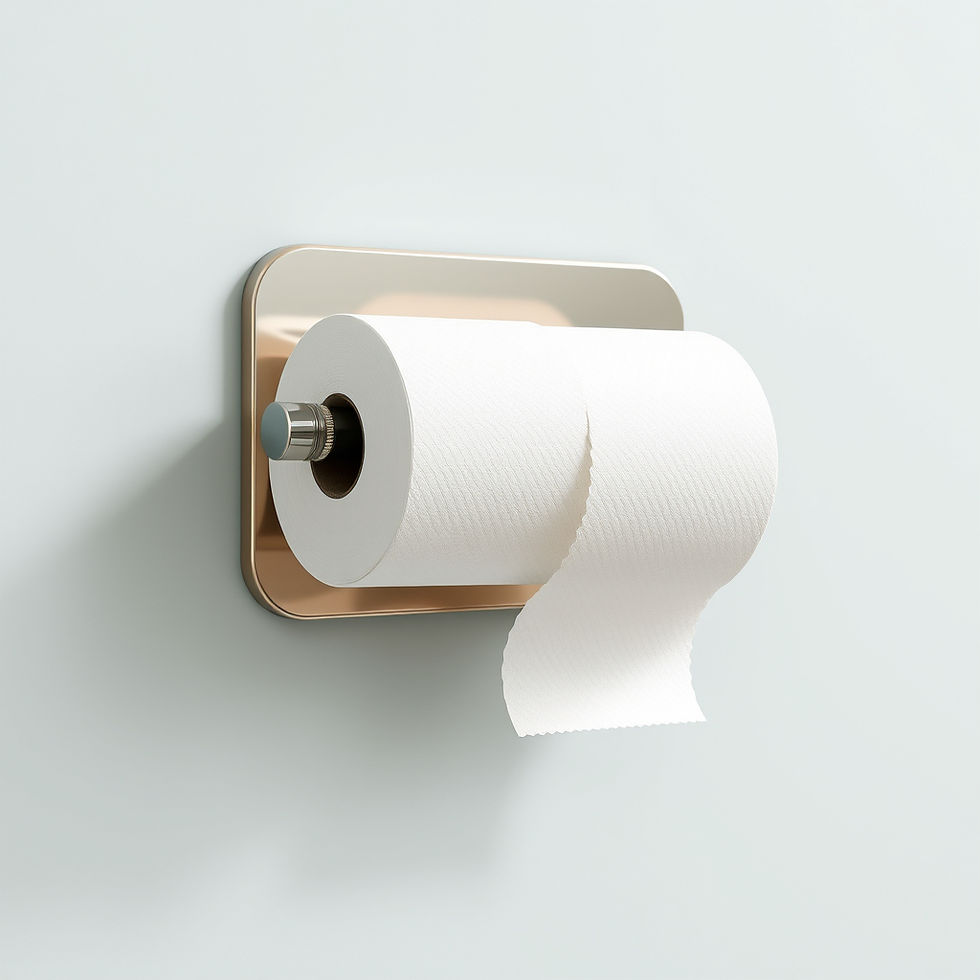
If you've spent any time looking at accessible restrooms, you've probably measured a toilet paper dispenser more times than you can count. It seems simple enough — 7 to 9 inches in front of the toilet, right?
But here's the question that comes up all the time, especially with modern multi-roll dispensers: Where exactly do you measure from? The centerline of the dispenser housing? The centerline of the roll itself? The outlet where the paper comes out?
Let's talk through it.
What the Code Actually Says
Both the 2025 California Building Code (CBC 11B-604.7) and the 2010 ADA Standards for Accessible Design (Section 604.7) use the exact same language:
"Toilet paper dispensers shall be 7 inches minimum and 9 inches maximum in front of the water closet, measured to the centerline of the dispenser."
There it is — "centerline of the dispenser." Not the centerline of the roll. Not the centerline of the paper outlet. The dispenser itself.
So if you're standing there with your tape measure, you're measuring to the geometric centerline of the dispenser housing — that's the controlling point. That's what the code says, and that's what you go by.
But What About the Height?
Height is measured differently, and this is where people sometimes mix things up.
The code uses the word "outlet" for the height requirement — and that word does mean the opening where the paper comes out. Per CBC 11B-604.7 (California's rule, which is stricter than the federal ADA):
The outlet must be below the grab bar
The outlet must be 19 inches minimum above the finish floor
The federal ADA only requires 15 inches minimum above the floor, with a maximum of 48 inches. California's CBC 11B is more stringent on both the minimum height and the requirement to be below the grab bar. For California projects, CBC governs for code enforcement — but the ADA still applies independently as a separate civil rights obligation.
So to be clear: 7–9 inches is measured to the centerline of the dispenser. The outlet height is measured to the paper exit opening. Two different things, two different reference points.
The Double-Roll Problem
Here's where it gets interesting — and honestly, where a lot of people get tripped up.
Walk into almost any commercial restroom today and you'll find a horizontal dual-roll dispenser. They're popular because they hold more paper and require less frequent restocking. But they create a real compliance question.
Let's say the housing of that dual-roll dispenser is centered at 8 inches in front of the toilet. Great — the dispenser centerline complies with the 7–9 inch rule. But the two rolls are mounted side by side, horizontally. That means one roll is closer to the toilet, and the other roll is farther away. The roll that's farther out might be sitting 11 or 12 inches in front of the toilet.
If a wheelchair user reaches for that back roll, they may be reaching well outside the intended access zone.
The US Access Board has actually flagged this exact issue in their technical guidance on toilet rooms, noting that large-roll and multi-roll dispensers "can be hard to reach due to their width" — specifically because the dispenser's physical width can push usable paper outside the effective reach zone, even when the centerline measurement technically complies.
So Do You Cite It as a Violation?
This is the judgment call you have to make in the field.
The strict code reading: If the centerline of the dispenser housing is within 7–9 inches, the 7–9 inch requirement is met. That's the literal language of both CBC and ADA.
The functional reality: On a wide horizontal dual-roll unit, the active roll may be sitting at 11+ inches from the toilet. A seated user with limited reach may not be able to access it. That's a real accessibility problem even if the paperwork "complies."
In a CASp report, here's how I approach it:
Document the dispenser centerline measurement — this is your primary finding under CBC 11B-604.7 and ADA 604.7.
Document the outlet height separately — is it below the grab bar? Is it at 19 inches minimum AFF?
If a dual-roll dispenser is installed, note the width of the unit and the position of each roll relative to the toilet. Even if the centerline technically complies, flag it as an advisory finding if one or both rolls fall outside the 7–9 inch window.
That way, your report is technically accurate to the code language and it captures the real-world usability concern. Both matter.
The Bottom Line: Toilet Paper Dispenser Centerline Measurement
You go by what the code says — and the code says centerline of the dispenser. That's your measurement point for the 7–9 inch front-to-back placement.
But accessibility is about more than passing measurements on paper. When a dispenser design — like a wide horizontal dual-roll unit — puts usable paper out of reach for the people the code is designed to protect, that's worth documenting. The code sets the floor. A good CASp report goes a step further.
DISCLAIMER: The information provided in this post is for informational purposes only and does not constitute legal advice. Please consult a qualified attorney or consultant for advice tailored to your situation.


Comments